
What Is 3D Jewelry Design? A Complete Beginner’s Guide
3D jewelry design is the process of creating jewelry digitally using specialized 3D design software. Instead of making the first design directly in metal, a jewelry designer can create a detailed digital model of a ring, pendant, bracelet, earring, or other jewelry piece on a computer.
Today, 3D jewelry design has become an important part of modern jewelry manufacturing. It allows designers to create complex shapes, make changes quickly, prepare models for 3D printing, and produce accurate casting or manufacturing patterns.
What Is 3D Jewelry Design?
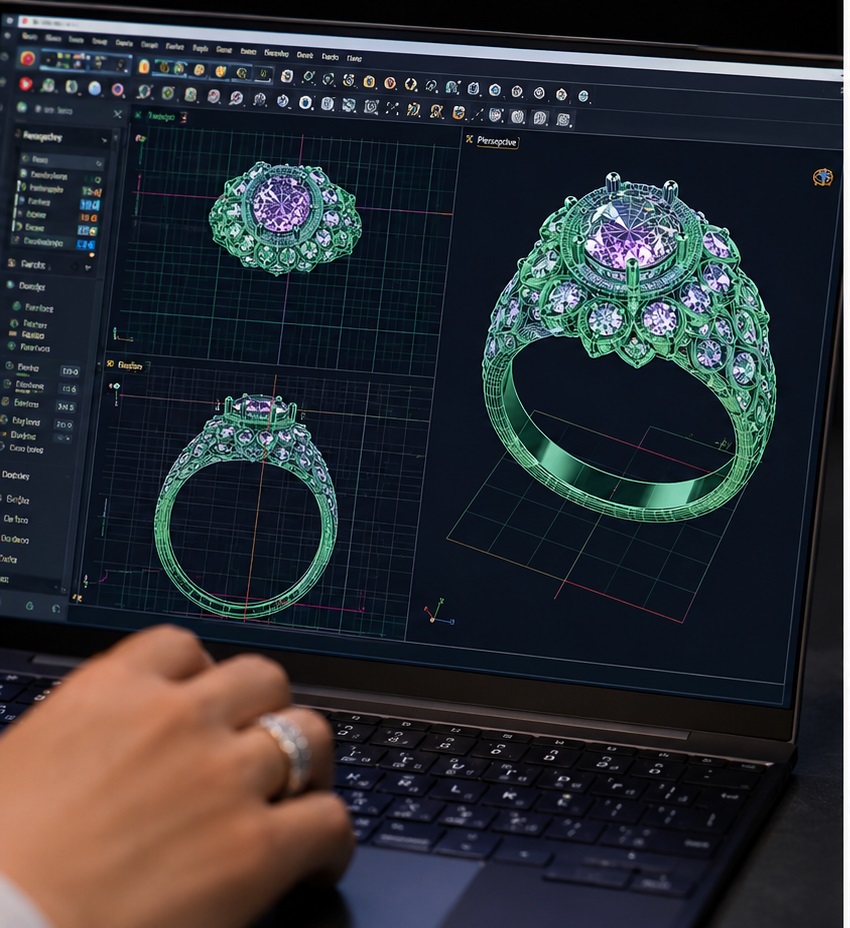
3D jewelry design means creating a three-dimensional digital model of a jewelry product. The designer can control the shape, thickness, dimensions, curves, details, stones, and other elements of the design.
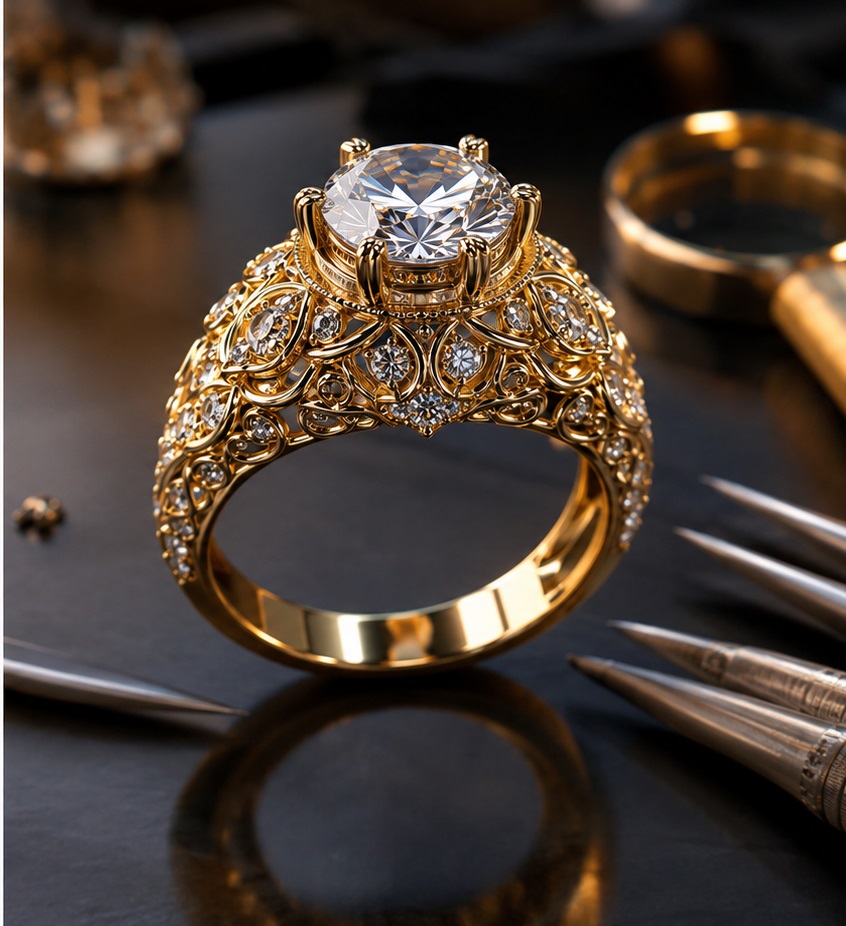
For example, a designer creating a gold ring can first build the complete ring digitally. Diamonds or other gemstones can then be positioned in the model to check their size, placement, and overall appearance.
The finished 3D model can be used for rendering, presentation, 3D printing, casting, CNC production, or further manufacturing processes.
How Does 3D Jewelry Design Work?
The basic process usually starts with an idea, sketch, reference image, or concept. The designer then converts that idea into a digital 3D model.
A typical workflow includes:
Concept and Reference – The designer decides what type of jewelry to create.
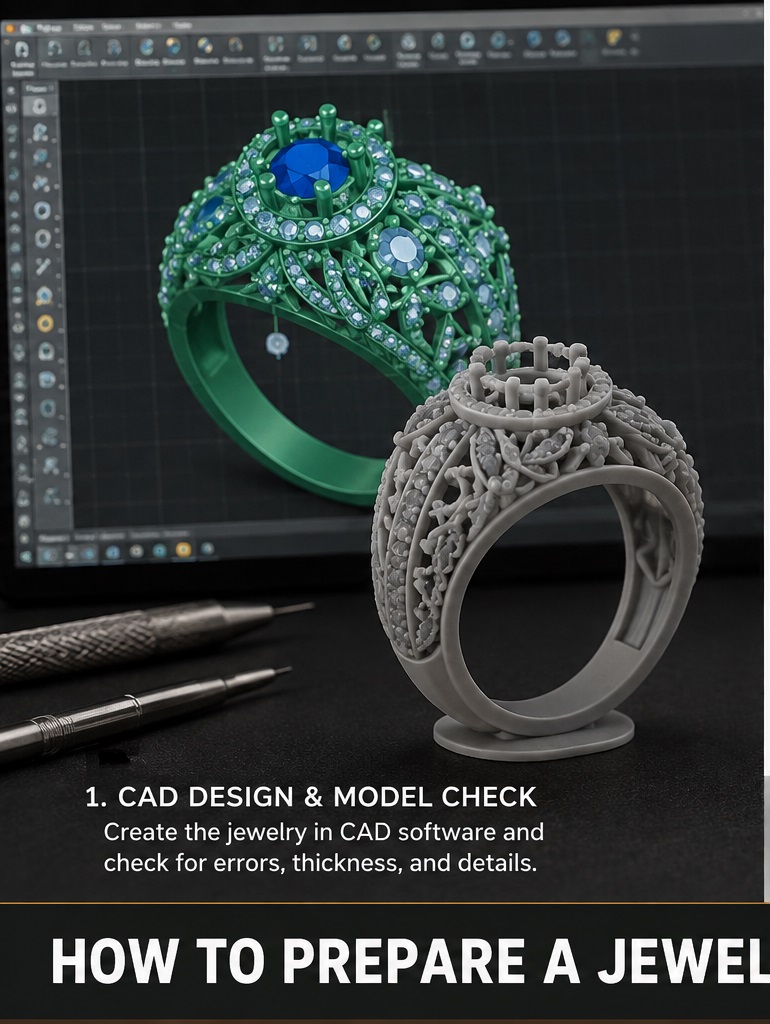
3D Modeling – The basic shape is created using jewelry CAD software.
Detailing – Decorative patterns, textures, engravings, and other details are added.
Stone Setting – Diamond and gemstone positions are created or prepared.
Checking the Model – Thickness, dimensions, connections, and other technical details are checked.
Rendering – A realistic image or animation can be created to show how the final jewelry may look.
3D Printing or Manufacturing – The digital model can be prepared for printing, casting, or other production methods.
Why Is 3D Jewelry Design Important?
Traditional jewelry production often requires several physical steps before the final product is completed. With 3D CAD design, many of these steps can be planned digitally before manufacturing begins.
One of the biggest advantages is accuracy. A designer can specify exact measurements and modify the model without having to recreate the entire piece from the beginning.
3D modeling also makes it easier to experiment with different designs. A ring can be made wider, thinner, larger, or more detailed digitally before producing a physical sample.
Benefits of 3D Jewelry Design
1. Faster Design Process
Digital modeling can significantly speed up the design process. Designers can duplicate elements, use patterns, mirror sections, and make modifications much faster than creating every detail manually.
2. Easy Modifications
If a customer wants a different stone size, ring width, engraving, or design detail, the CAD model can be edited without starting the entire design again.
3. Accurate Measurements
CAD software allows designers to work with precise dimensions. This is particularly important for rings, stone settings, prongs, and other parts that require accurate measurements.
4. Realistic Rendering
A 3D jewelry model can be rendered to create realistic images showing materials such as gold, silver, platinum, and gemstones.
This allows customers to see the proposed design before it is manufactured.
5. 3D Printing
Many jewelry CAD models can be prepared for 3D printing. A suitable printer and casting workflow can then be used to create a physical pattern or prototype.
6. Reduced Production Errors
By checking the digital model before manufacturing, designers can identify many potential problems early. This can help reduce material waste and production mistakes.
Popular Types of 3D Jewelry Models
3D jewelry design can be used to create almost any type of jewelry, including:
Rings
Pendants
Earrings
Bracelets
Necklaces
Bangles
Brooches
Jewelry charms
Custom name jewelry
Religious pendants
Gemstone jewelry
Fashion jewelry
Designers can also create highly detailed reliefs, ornamental patterns, animal designs, floral motifs, and custom sculptures for jewelry production.
What Software Is Used for 3D Jewelry Design?
Different designers use different software depending on their requirements and experience.
Popular jewelry CAD and 3D modeling tools include Rhino with jewelry-focused plugins, MatrixGold, ZBrush, Blender, and other specialized CAD applications.
The choice of software depends on the type of jewelry, required level of detail, manufacturing method, and the designer’s workflow.
3D Jewelry Design and AI
Artificial intelligence is also becoming increasingly useful in the jewelry design industry.
AI-based tools can help generate design concepts from images or text descriptions, create references, assist with modeling workflows, and produce visual concepts faster.
However, an AI-generated design may still require professional CAD editing before it can be used for actual jewelry manufacturing. Important factors such as wall thickness, stone settings, mesh quality, structural strength, and manufacturing requirements need to be checked carefully.
From 3D Model to Real Jewelry
Creating the digital model is only one part of the complete jewelry manufacturing process.
After the model is finalized, it may be exported in formats such as STL, OBJ, or other compatible formats depending on the production workflow.
The model can then be used for 3D printing, wax or resin pattern production, investment casting, CNC machining, or other manufacturing processes.
This creates a connection between digital jewelry design and physical jewelry production.
Is 3D Jewelry Design Difficult to Learn?
Learning 3D jewelry design requires practice, but beginners can start with simple projects.
A good learning path is to begin with basic shapes such as rings, simple pendants, and geometric designs. After learning the fundamentals, designers can move to stone settings, engravings, complex patterns, and detailed sculpting.
Understanding jewelry manufacturing is also important because a beautiful digital model is not always suitable for production. A professional jewelry CAD designer needs to understand how the model will eventually be printed, cast, finished, and assembled.
Future of 3D Jewelry Design
The future of jewelry design is becoming increasingly digital. CAD modeling, 3D printing, realistic rendering, AI-assisted design, and digital manufacturing are changing how jewelry is designed and produced.
For jewelry businesses, digital modeling can make customization easier and allow designers to show customers a realistic concept before manufacturing begins.
As AI and 3D technology continue to improve, the combination of AI + CAD + 3D printing + jewelry manufacturing is likely to become an increasingly important workflow for modern jewelry designers.
Final Thoughts
3D jewelry design is more than simply creating a beautiful model on a computer. It combines creativity, technology, precision, and knowledge of jewelry manufacturing.
Whether you are a beginner interested in learning jewelry CAD, a professional designer, or a jewelry business looking to create custom products, 3D design can provide a powerful way to turn ideas into production-ready jewelry.
With the right software, skills, and workflow, a simple idea or reference image can be transformed into a detailed digital jewelry model ready for visualization and manufacturing.