
Introduction
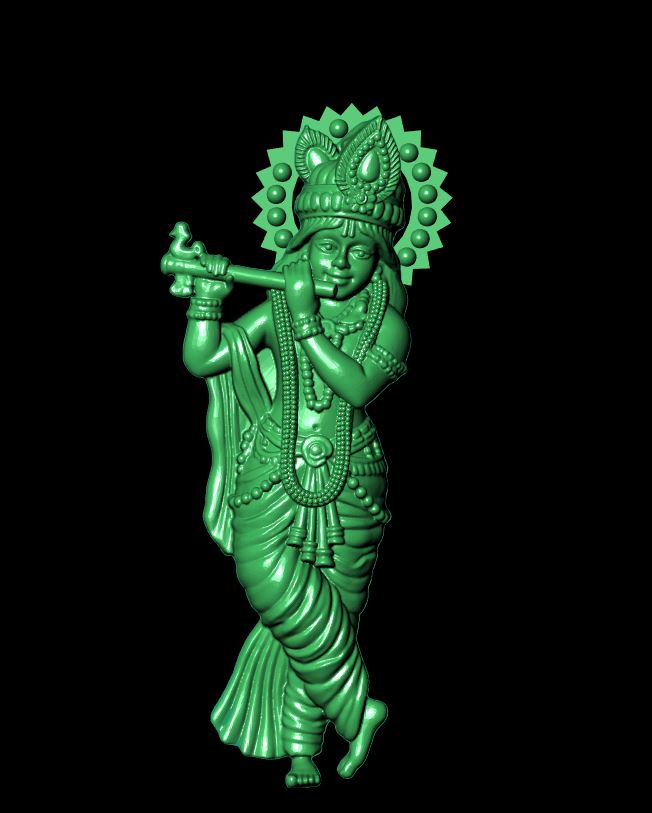
The intersection of ancient spirituality and modern technology has opened unprecedented avenues for devotional art and jewelry manufacturing. Among the most revered motifs in Hindu iconography, Lord Krishna playing his divine flute holds a deeply symbolic and aesthetic place. Today, the advent of Computer-Aided Design (CAD) has transformed how artisans bring this sacred imagery to life. A Lord Krishna Playing Flute 3D CAD model represents a harmonious blend of traditional devotion and precise engineering, enabling jewelers to craft intricate, wearable pieces of sacred art with remarkable accuracy. This article explores the significance of this design motif, the technical intricacies of CAD modeling for religious jewelry, and its growing importance in modern manufacturing.
The Cultural and Spiritual Significance of Krishna’s Flute
The Symbolism of the *Bansuri*
In Hindu philosophy, Lord Krishna is frequently depicted standing in a graceful posture, engrossed in playing his bamboo flute (*bansuri*). This imagery is rich in metaphysical meaning:
- The Hollow Reed: The flute represents the human heart and body. Just as the flute is hollow and devoid of ego, a devotee must surrender completely for the divine melody to flow through them.
- The Call to the Soul: The music of Krishna’s flute is said to awaken the dormant souls of humanity, drawing them away from worldly illusions and toward eternal truth and love.
Translating this profound symbolism into jewelry requires more than just aesthetic skill; it demands a deep respect for the cultural narrative. Whether rendered in gold, silver, or platinum, a piece featuring Krishna and his flute serves as a portable talisman of peace, devotion, and divine harmony.
The Evolution of Religious Jewelry Design: From Hand-Carving to 3D CAD
Traditionally, creating detailed religious pendants, rings, and brooches involved meticulous hand-sculpting in wax or metal. While these handmade pieces possessed unique charm, they were often limited by human error, inconsistent scaling, and lengthy production times. The introduction of 3D CAD technology has revolutionized the jewelry industry, particularly for intricate religious motifs.
- Precision and Symmetry: Fine details—such as the feather of the peacock (*mayur pankh*) in Krishna’s crown, the gentle curves of the facial features, and the delicate finger placement on the flute—require extreme geometric precision. CAD allows designers to achieve microscopic accuracy.
- Scalability: A single master CAD file can be easily resized to fit various product categories, from a delicate charm bracelet to a bold statement pendant, without losing structural integrity or artistic nuance.
Anatomy of a Lord Krishna Playing Flute 3D CAD Model
Creating a high-end religious jewelry model requires specialized digital sculpting and technical foresight. A comprehensive CAD model of this subject typically incorporates several key elements:
1. The Posture and Proportions
The model must capture the iconic *Tribhanga* posture—a triple-bend stance where the body is deflected at the neck, waist, and knee. This gives the figure a dynamic yet serene fluidity, which must be mathematically balanced in the digital workspace to ensure the final cast piece is structurally sound.
2. Accoutrements and Embellishments
Krishna’s traditional adornments offer vast opportunities for jewelry texturing:
- The Crown (*Mukut*): Often embedded with stone settings (prong, bezel, or pave) for diamonds or cubic zirconia.
- Garlands (*Vaijayanti Mala*): Rendered with repetitive bead patterns that CAD software can align flawlessly along the curvature of the torso.
- The Flute: Positioned precisely at the lips and supported by delicately rendered fingers.
3. Engineering for Manufacturing
A superior CAD model is not just visually appealing; it is optimized for rapid prototyping (3D printing) and casting. Designers must account for wall thickness, undercuts, and sprue placement so the resin print translates flawlessly into precious metal during the lost-wax casting process.
Advantages for Modern Jewelers and Devotees
The adoption of digital models for religious artifacts benefits both creators and consumers. For jewelry manufacturers, digital files reduce prototyping time and minimize material waste through simulation. Jewelers can also present photorealistic renderings to clients before casting, allowing for custom modifications such as engraving or stone selection. For devotees, these modern manufacturing techniques ensure access to affordable yet exquisitely detailed pieces of religious expression that honor ancient traditions with contemporary craftsmanship.
Conclusion
The Lord Krishna Playing Flute 3D CAD model stands as a testament to how modern technology can preserve and elevate sacred traditions. By merging the spiritual depth of ancient iconography with the precision of digital design, jewelers can craft pieces of unmatched beauty and detail. As digital fabrication continues to advance, these sacred designs will undoubtedly play a vital role in keeping timeless devotional art accessible and vibrant for generations to come.