
What Is 3D Printed Jewellery?
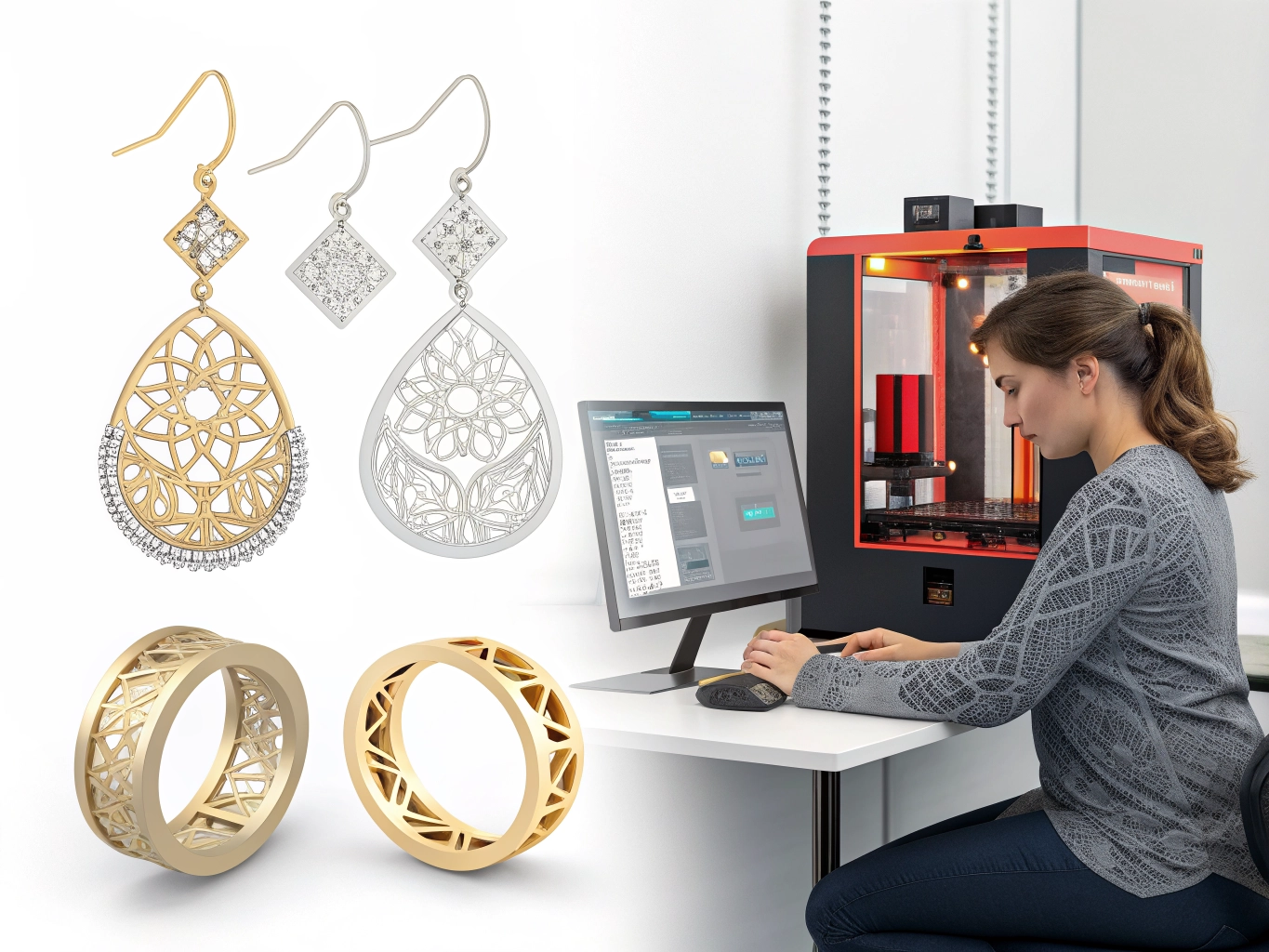
3D Printed Jewellery is jewelry created using digital 3D models and additive manufacturing technology. Instead of producing every design directly through traditional manufacturing methods, designers can first create a digital model and use a compatible 3D printer to produce a physical prototype or pattern.
This technology has become increasingly useful for jewelry designers because it allows complex shapes, decorative patterns, and customized designs to be developed digitally.
From simple rings to highly detailed pendants, digital manufacturing provides designers with more freedom to experiment.
How Does 3D Printed Jewellery Work?
The process generally begins with a digital jewelry design. The model can be created using professional CAD software or obtained as a compatible 3D file.
Once the model is prepared, it is checked for printable geometry. The file is then imported into slicing software where printing parameters are configured.
The slicer converts the model into instructions that the printer can understand. After printing, the physical model may require cleaning, curing, finishing, or additional manufacturing steps depending on the material and production workflow.
Popular Types of 3D Printed Jewellery
3D Printed Rings
Rings are one of the most common applications of digital jewelry modeling. Designers can create detailed patterns and adjust the ring size digitally.
3D Printed Pendants
Pendants are suitable for digital manufacturing because they can contain highly detailed decorative surfaces.
3D Printed Earrings
Earrings can be created in many styles, including modern geometric shapes, floral patterns, traditional designs, and ornamental concepts.
Custom Jewellery
One of the biggest advantages of digital manufacturing is customization. Designers can create unique pieces according to specific requirements.
Advantages of 3D Printed Jewellery
3D printing can reduce the time required to develop prototypes. Designers can test an idea quickly and make changes before final manufacturing.
Another advantage is design freedom. Digital modeling allows designers to create patterns that may be difficult to produce manually.
Customization is also easier. Size, proportions, decorative elements, and other design features can be changed digitally.
Important Considerations Before Printing
A beautiful digital design is not automatically a successful printable model. The geometry must be suitable for the intended manufacturing method.
Designers should check wall thickness, small details, intersections, unsupported areas, and overall dimensions.
For professional jewelry production, the model should be tested before committing to a final manufacturing process.
Finding Digital Jewellery Models
Designers searching for ready-made jewelry models can explore insa3d.link, where different jewelry-related 3D designs can be used for inspiration, prototyping, and digital manufacturing workflows.
Conclusion
3D Printed Jewellery combines traditional jewelry creativity with modern digital manufacturing. It gives designers greater control over customization, prototyping, and complex decorative designs.
Whether you are a jewelry manufacturer, CAD designer, 3D printing professional, or hobbyist, learning how to work with digital jewelry models can help improve your design workflow.